


أبرز اتجاهات تكنولوجيا التعليم التي ترسم ملامح المستقبل في 2025
مقدمة
يشهد قطاع التعليم تحولات جذرية مدفوعة بالتطورات التكنولوجية المتسارعة، حيث أصبحت التكنولوجيا ليست مجرد أداة مساعدة بل عاملًا أساسيًا في إعادة تشكيل طرق التدريس والتعلم وقياس النتائج الأكاديمية. في عام 2025، تتصدر عدة تقنيات واتجاهات تكنولوجية المشهد التعليمي، مما يفتح آفاقًا جديدة لتعزيز جودة التعليم وتوسيع فرص التعلم.
في هذا المقال، نستعرض أهم الاتجاهات التكنولوجية في مجال التعليم التي تؤثر بشكل مباشر على المؤسسات التعليمية والطلاب والمعلمين، مع التركيز على كيفية الاستفادة منها لتحسين التجربة التعليمية.
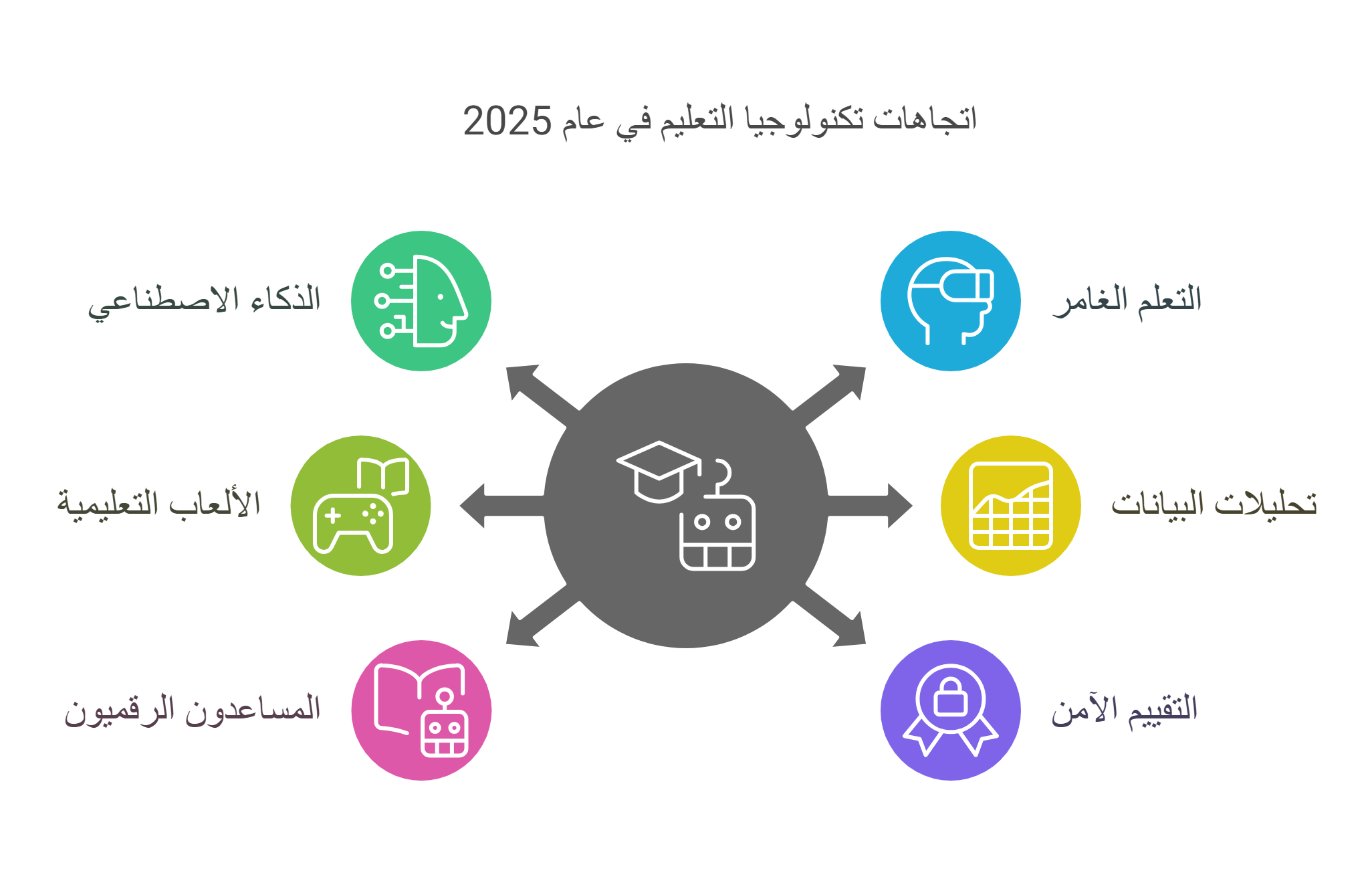
1. الذكاء الاصطناعي: التخصيص الذكي للتعلم
أصبح الذكاء الاصطناعي (AI) ركيزة أساسية في تطوير أنظمة التعليم الحديثة. بحلول 2025، من المتوقع أن تعتمد نسبة كبيرة من المؤسسات التعليمية على تقنيات الذكاء الاصطناعي لتقديم تجارب تعليمية مخصصة.
تقوم أنظمة الذكاء الاصطناعي بتحليل بيانات أداء الطلاب بشكل مستمر، مما يتيح تعديل المحتوى التعليمي وفقًا لاحتياجات كل طالب، وتقديم توصيات تعليمية موجهة، بالإضافة إلى توفير تغذية راجعة فورية تساعد الطلاب على تحسين أدائهم.
كما تسهم تقنيات الذكاء الاصطناعي في أتمتة المهام الإدارية مثل تصحيح الاختبارات وتتبع الحضور، مما يخفف العبء عن المعلمين ويتيح لهم التركيز على الجوانب التربوية.
2. التعلم التفاعلي باستخدام تقنيات الواقع الافتراضي والمعزز
تشكل تقنيات الواقع الافتراضي (VR) والواقع المعزز (AR) نقلة نوعية في طرق التدريس، حيث توفر بيئات تعليمية تفاعلية تسمح للطلاب بالتفاعل مع المحتوى التعليمي بشكل مباشر وواقعي. تتيح هذه التقنيات للطلاب إجراء تجارب علمية افتراضية، واستكشاف المواقع التاريخية والجغرافية، والتفاعل مع نماذج ثلاثية الأبعاد، مما يعزز من فهمهم ويزيد من تفاعلهم مع المادة التعليمية.
من المتوقع أن يشهد سوق هذه التقنيات في التعليم نموًا كبيرًا خلال عام 2025، مع زيادة الاستثمار في تطوير محتوى تعليمي يعتمد على هذه الوسائط التفاعلية.
3. الألعاب التعليمية (Gamification) والتعلم التفاعلي
تستخدم الألعاب التعليمية عناصر اللعب مثل النقاط، والشارات، والتحديات لتحفيز الطلاب وزيادة مشاركتهم في العملية التعليمية. تحوّل هذه الأساليب الدروس التقليدية إلى تجارب تعليمية ممتعة وتنافسية، مما يعزز من دافعية الطلاب واستيعابهم للمعلومات.
توفر منصات التعلم التفاعلي أدوات تمكن المعلمين من متابعة تقدم الطلاب وتقديم دعم مخصص، مما يخلق بيئة تعليمية محفزة ومتكاملة.
4. تحليلات التعلم والتعلم التكيفي
توفر تحليلات التعلم (Learning Analytics) رؤى معمقة حول سلوك الطلاب وأدائهم، مما يساعد المؤسسات التعليمية على تصميم برامج تعليمية أكثر فعالية.
تعتمد أنظمة التعلم التكيفي على هذه البيانات لتعديل المحتوى ومستوى الصعوبة بشكل ديناميكي، بما يتناسب مع قدرات واحتياجات كل طالب، مما يساهم في تحسين النتائج وتقليل الفجوات التعليمية.
5. المساعدات الرقمية وروبوتات المحادثة
تنتشر المساعدات الرقمية وروبوتات المحادثة المدعومة بالذكاء الاصطناعي في مجال التعليم، حيث تقدم دعمًا فوريًا للطلاب من خلال الإجابة على استفساراتهم، وتقديم إرشادات تعليمية، ومساعدتهم في تنظيم أوقات الدراسة.
تعمل هذه الأدوات على تسهيل التعلم الذاتي، خاصة للطلاب الذين يفضلون الدراسة حسب وتيرتهم الخاصة، كما تقلل الضغط على الكادر التعليمي والإداري.
6. التقييم الإلكتروني الآمن والشفاف
مع تزايد الاعتماد على التعليم الإلكتروني، تبرز أهمية توفير آليات تقييم إلكترونية تحافظ على نزاهة العملية التعليمية. تعتمد المؤسسات على تقنيات مثل المراقبة الإلكترونية المدعومة بالذكاء الاصطناعي، والتحقق البيومتري، وتقنية البلوك تشين لضمان أمان وشفافية التقييمات.
تساعد هذه التقنيات في منع الغش، والتأكد من هوية الطالب، وحفظ السجلات الأكاديمية بشكل آمن وموثوق.
خاتمة
تشير التوقعات إلى أن سوق تكنولوجيا التعليم سيصل إلى مستويات قياسية بحلول نهاية عام 2025، مما يعكس الدور الحيوي الذي تلعبه التكنولوجيا في تطوير التعليم. المؤسسات التعليمية التي تتبنى هذه الاتجاهات ستتمكن من تقديم تجارب تعليمية أكثر تفاعلًا وشمولية، مع ضمان جودة ومصداقية مخرجاتها.
إن تبني هذه التقنيات اليوم هو استثمار استراتيجي يضمن جاهزية المؤسسات لمواجهة تحديات المستقبل وتحقيق التميز التعليمي.