




Diagnostic errors represent a critical challenge in healthcare, with severe consequences ranging from patient harm to life-threatening situations. Intrazero’s Hospital Information System (HIS) is designed to mitigate these issues by addressing their root causes and improving patient outcomes and operational efficiency.
The Scope of Diagnostic Errors
Diagnostic errors impact various aspects of healthcare. Key statistics include:
- Overall Impact: 10–15% of medical diagnoses are incorrect.
- Hospital Settings:
- 23% of patients experience a diagnostic error.
- 17% suffer harm due to diagnostic inaccuracies.
- 6.6% of hospital deaths are linked to these errors.
- Outpatient Care:
- 5.08% of U.S. adults encounter a diagnostic error annually, with approximately half potentially harmful.
- Primary Care:
- Diagnostic errors occur in 6.3% of encounters, with misdiagnosis-related harm in 0.1%.
These numbers highlight a pressing need for transformative healthcare systems capable of reducing diagnostic mistakes.
The Toll on Hospitals
Beyond patient outcomes, diagnostic errors take a significant toll on hospitals:
- Reputation Damage: Frequent errors erode patient trust and diminish institutional credibility.
- Financial Losses: Legal liabilities and operational inefficiencies due to errors increase costs.
- Staff Burnout: Repeated errors and overburdened processes lead to frustration and fatigue among healthcare providers.
The cost of these errors underscores the need for a robust system like HIS to address root causes while enabling hospitals to maintain their operational and financial health.
Root Causes of Diagnostic Errors and HIS Solutions
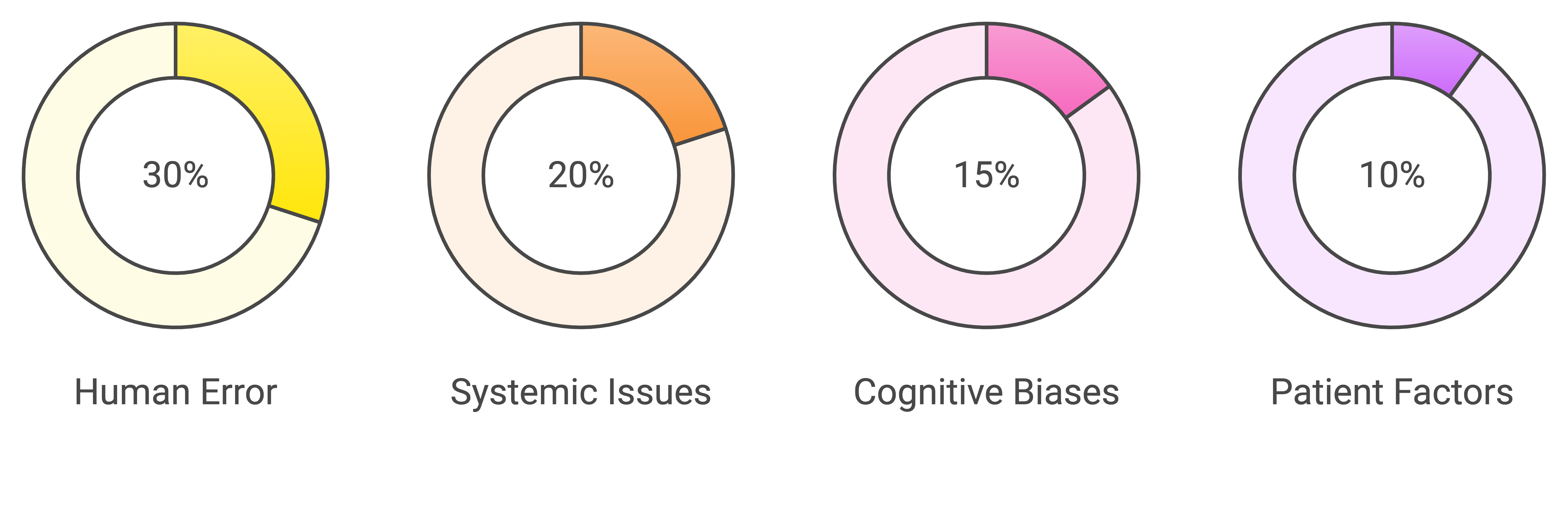
Diagnostic errors result from multifaceted issues. Here’s how HIS directly addresses each root cause:
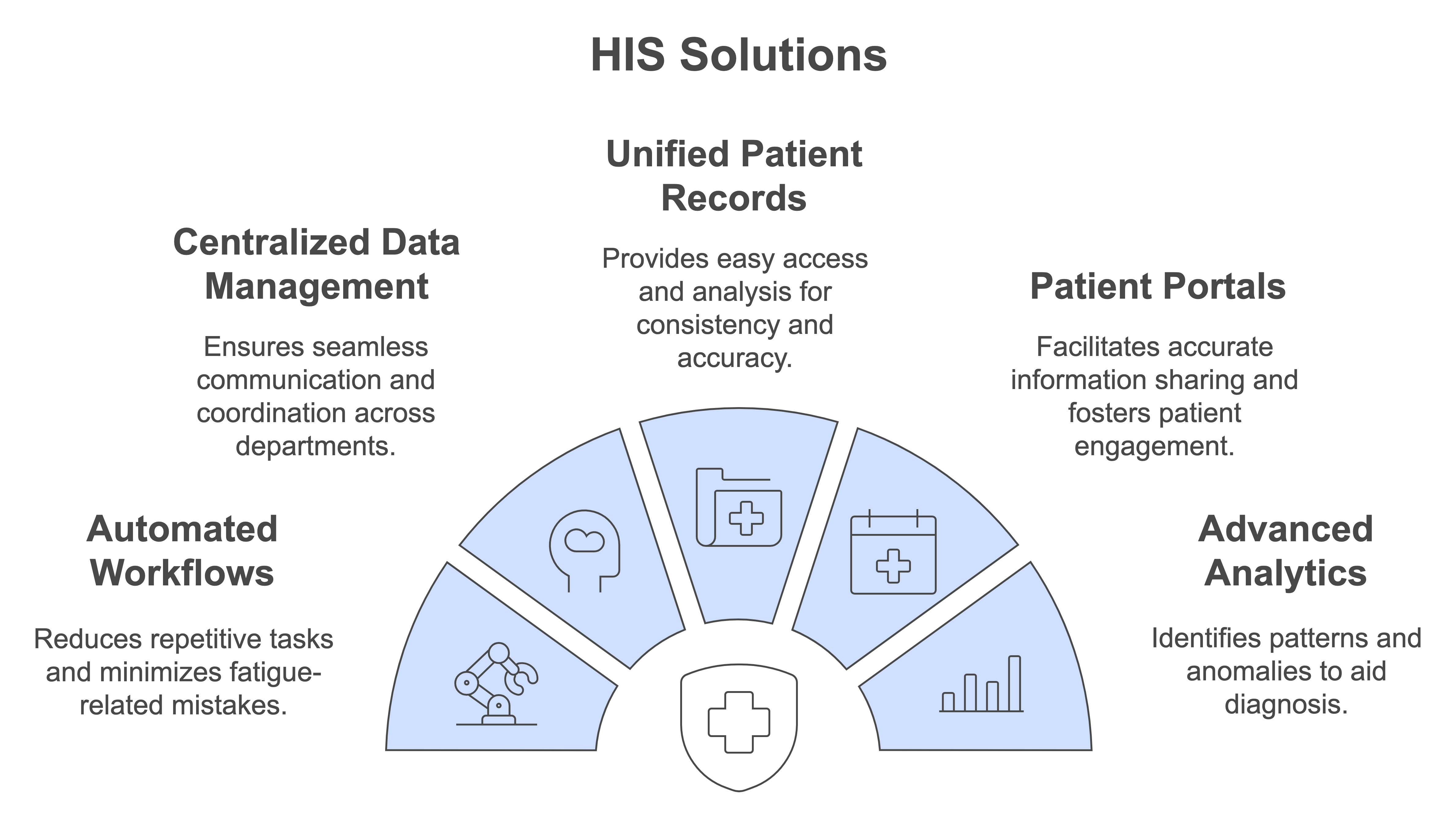
- Human Error (30%): Resulting from fatigue, lack of training, or inadequate communication.
- HIS Feature: Automated workflows reduce manual intervention, minimizing fatigue-related mistakes.
- Systemic Issues (20%): Inefficiencies and resource constraints in healthcare systems.
- HIS Feature: Centralized data management ensures seamless communication and coordination across departments.
- Cognitive Biases (15%): Misinterpretation of patient data.
- HIS Feature: Patient records are in a unified platform for easy access and analysis, reducing reliance on subjective judgment.
- Patient Factors (10%): Limited or inaccurate information provided by patients.
- HIS Feature: Patient portals enable patients to share accurate information and engage in their care process.
- Disease Complexity (15%): Challenges in diagnosing rare or complex conditions.
- HIS Feature: Advanced analytics identify patterns and anomalies that might go unnoticed in complex cases.
- Testing Limitations (10%): Faulty or inadequate diagnostic tests.
- HIS Feature: Integration with lab systems ensures accurate test results and timely reporting.
Proven Outcomes of HIS Implementation
Healthcare providers adopting HIS have observed significant improvements:
- Reduced Diagnostic Errors: Streamlined data access lowers rates of misdiagnosis.
- Operational Efficiency: Automation decreases the burden on healthcare staff, allowing more focus on patient care.
- Improved Patient Safety: Real-time insights prevent errors before they escalate.
Take Action with HIS
The statistics and challenges make it clear: diagnostic errors require robust, innovative solutions. Intrazero’s HIS provides the tools and insights needed to tackle these issues effectively.
Ready to Revolutionize Healthcare?
- Explore HIS Today:Visit Intrazero for detailed insights into our solutions.
- Request a Demo: Experience the transformative power of HIS in your organization.
- Partner with Intrazero: Collaborate with our experts to tailor HIS to your institution’s needs.
Let’s build a future where healthcare is not only efficient but precise, ensuring every patient receives the care they deserve.
Mohamed Adel
AI & Platform