





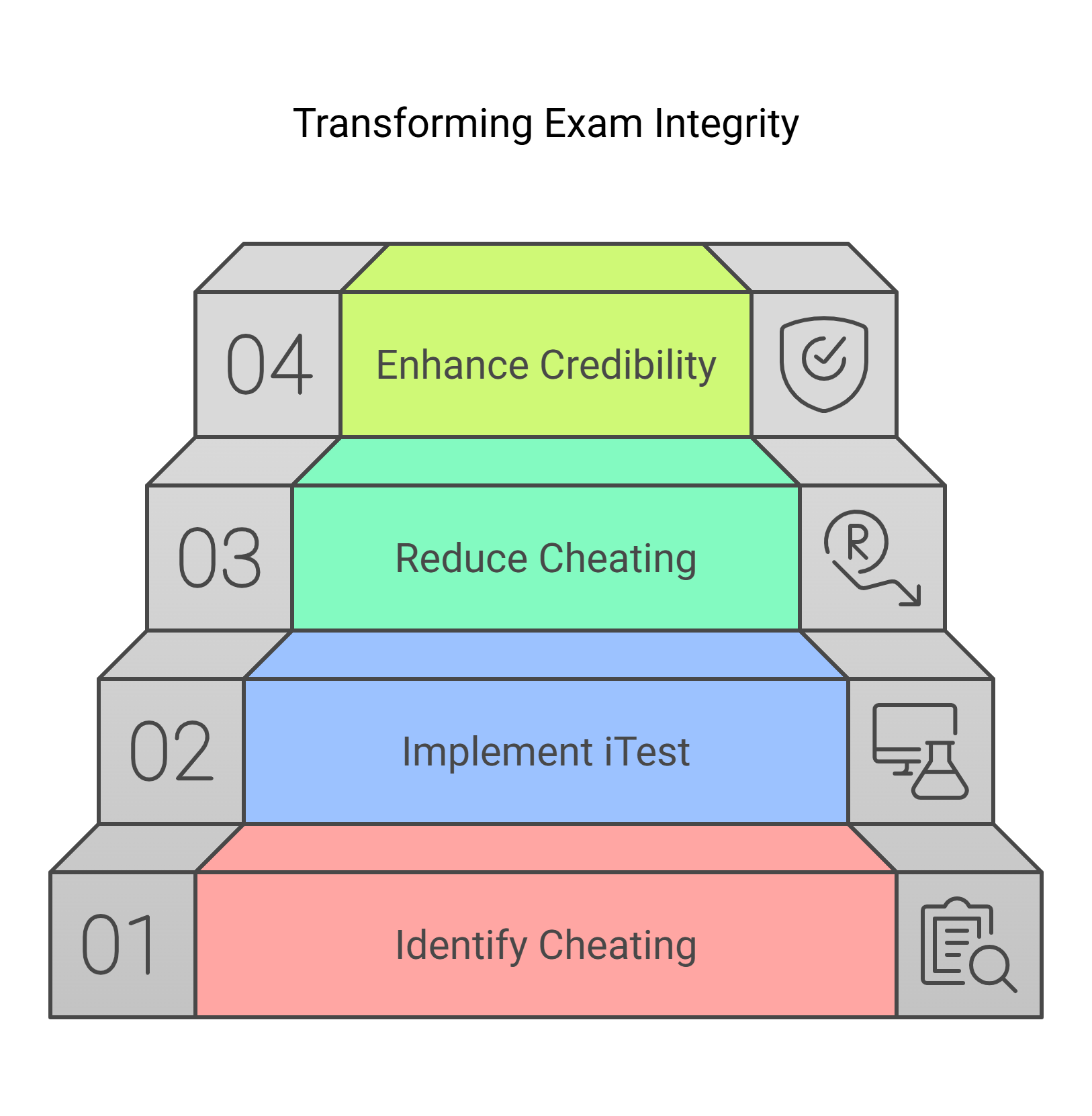
Academic integrity is a cornerstone of education, yet many Egyptian universities struggle to combat cheating effectively. With cheating rates reportedly as high as 85% in pre-university exams and widespread group cheating in higher education, the credibility of academic assessments has been severely undermined14. By adopting Intrazero's iTest solution, universities across Egypt have begun transforming their exam processes, achieving remarkable reductions in cheating incidents. Here’s how iTest’s innovative features are addressing this pervasive issue.
The Challenge: Combating Cheating in Egyptian Higher Education
Cheating is deeply entrenched in Egypt’s education system, with students resorting to creative methods such as hidden wireless devices, leaked exam papers, and even teacher-assisted cheating14. Manual proctoring methods have proven insufficient, as human proctors often fail to detect subtle or coordinated cheating behaviors. Additionally, overcrowded classrooms and exam halls exacerbate the problem, making it harder to ensure fair assessments.
Egyptian universities needed a reliable, scalable solution to safeguard their assessments while maintaining a seamless experience for students and educators. This is where iTest stepped in.
The Solution: iTest’s Advanced Features
Egyptian universities turned to iTest, Intrazero’s AI-powered online examination system, which offers a comprehensive suite of features designed to enhance exam integrity and efficiency:
- AI Proctoring: Leveraging artificial intelligence, iTest monitors students in real-time, detecting suspicious behaviors such as unauthorized movements or multiple faces in the camera frame.
- Dynamic Question Bank: iTest enables educators to create diverse question banks and randomize questions across exams, making it harder for students to share answers.
- Performance Analytics: The platform provides detailed insights into student performance, helping educators identify trends and areas for improvement.
- Secure Exam Environment: Features like browser lockdown and IP tracking ensure that students cannot access external resources during exams.
Implementation at Egyptian Universities
The implementation of iTest across various Egyptian universities was seamless. Its user-friendly interface allowed both students and faculty to adapt quickly. Exams were conducted securely through AI proctoring and randomized question sets, significantly reducing opportunities for cheating.
Results: A Remarkable 80% Reduction in Cheating
After implementing iTest, participating Egyptian universities reported an average 80% drop in cheating incidents within the first semester. Key outcomes included:
- Improved Academic Integrity: Students were deterred from cheating due to the advanced monitoring capabilities of AI proctoring.
- Enhanced Efficiency: Faculty saved time on exam preparation and grading thanks to automated processes.
- Positive Feedback: Both students and educators appreciated the fairness and transparency of the new system.
Why iTest Stands Out
Compared to manual methods, iTest delivers unmatched advantages:
- Accuracy: Human proctors miss up to 30% of cheating cases; AI proctoring detects nearly all incidents.
- Scalability: iTest supports institutions of all sizes, accommodating thousands of students simultaneously.
- Flexibility: The platform’s customizable features allow institutions to tailor exams to their unique needs.
Conclusion
The success story of Egyptian universities highlights how technology can revolutionize educational assessments. By adopting Intrazero’s iTest solution, these institutions not only reduced cheating but also enhanced the overall quality of their academic evaluations. As Egypt continues its efforts to modernize its higher education system, tools like iTest serve as powerful examples of how innovation can uphold academic integrity while streamlining processes.
For institutions seeking a reliable way to combat cheating and improve exam efficiency, iTest is a game-changer worth exploring.
Mohamed Gamal
Solutions & Delivery