





In today’s competitive market, creating products that resonate with users is paramount. User-centered design (UCD) is a design philosophy that places the user at the heart of the development process. By understanding the needs, desires, and behaviors of users, businesses can create products that are not only functional but also delightful to use. Here’s a deeper look into user-centered design, its benefits, and how IntraZero applies this philosophy to deliver innovative solutions.
What is User-Centered Design?
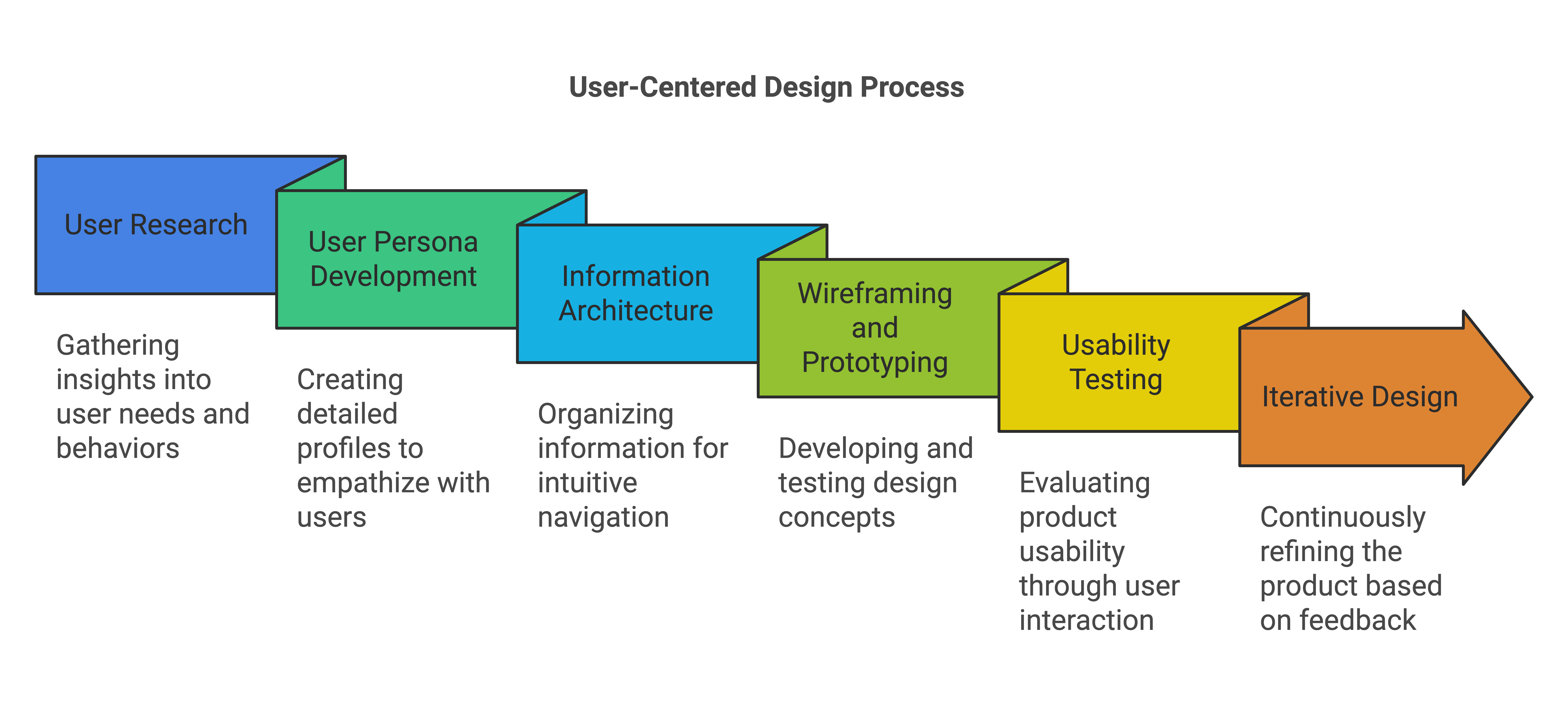
- User Research
Conducting user research involves gathering insights into the needs, goals, and pain points of the target audience through various methods such as surveys, interviews, and usability testing. Observing users in their natural environments, known as shadowing, can reveal unspoken needs and habitual patterns that might not surface in interviews. Additionally, focus groups bring together representative users for in-depth discussions on specific features or the overall product vision, while behavioral analysis uses analytics tools to identify pain points and moments where users disengage. These methods offer a comprehensive understanding of users that informs the design process.
- User Persona Development
Developing user personas begins by segmenting the audience according to demographics, goals, and challenges to ensure diverse perspectives are captured. Creating detailed profiles, including names, backgrounds, motivations, and pain points, allows designers to empathize with different user types and make design decisions that resonate with their preferences. Empathy mapping workshops capture what users think, feel, say, and do, while scenarios and storyboards visualize personas interacting with the product, offering clear insights into how each persona navigates and benefits from the design.
- Information Architecture
Effective information architecture begins with card sorting, where users organize information and features in an intuitive way, revealing natural categorization patterns. A thorough content inventory and hierarchy prioritize essential information, ensuring it’s easily accessible to users and reducing potential frustration. User flows are then mapped to outline a seamless path from start to goal, minimizing redundant steps. Finally, tree testing validates this structure, helping confirm that users can find information with ease, and optimizing the design for quick and efficient navigation.
- Wireframing and Prototyping
Wireframing and prototyping start with low-fidelity wireframes, simple sketches that convey ideas quickly without significant resource investment. These evolve into clickable prototypes using tools like Figma or Adobe XD, allowing designers to test how users interact with the interface in a realistic way. Progressive prototyping, which moves from basic layouts to refined designs, enables iterative improvement based on direct user feedback. This cycle of testing and refining prototypes ensures the design addresses user needs effectively before committing to full development.
- Usability Testing
Usability testing should begin as early as possible, ideally with a functional prototype, so potential design flaws are identified and resolved before further investment. Realistic tasks give users scenarios they would typically encounter, providing authentic insights into the product’s usability. Screen recording and eye-tracking tools are useful for capturing user behavior, identifying friction points, and enabling a thorough analysis. Iterative testing is then conducted, using findings to address specific pain points and retest the design to validate improvements.
- Iterative Design
Iterative design approaches the development process as a continuous cycle of improvement, where each stage builds on user insights to refine the product incrementally. Regular feedback sessions, such as post-testing surveys and interviews, provide ongoing guidance for each design phase. Flexibility in development is maintained through agile methodologies, allowing adjustments based on evolving needs and feedback. Additionally, continuous monitoring of user interactions post-launch ensures that the product adapts to any emerging issues or user needs.
The Benefits of User-Centered Design
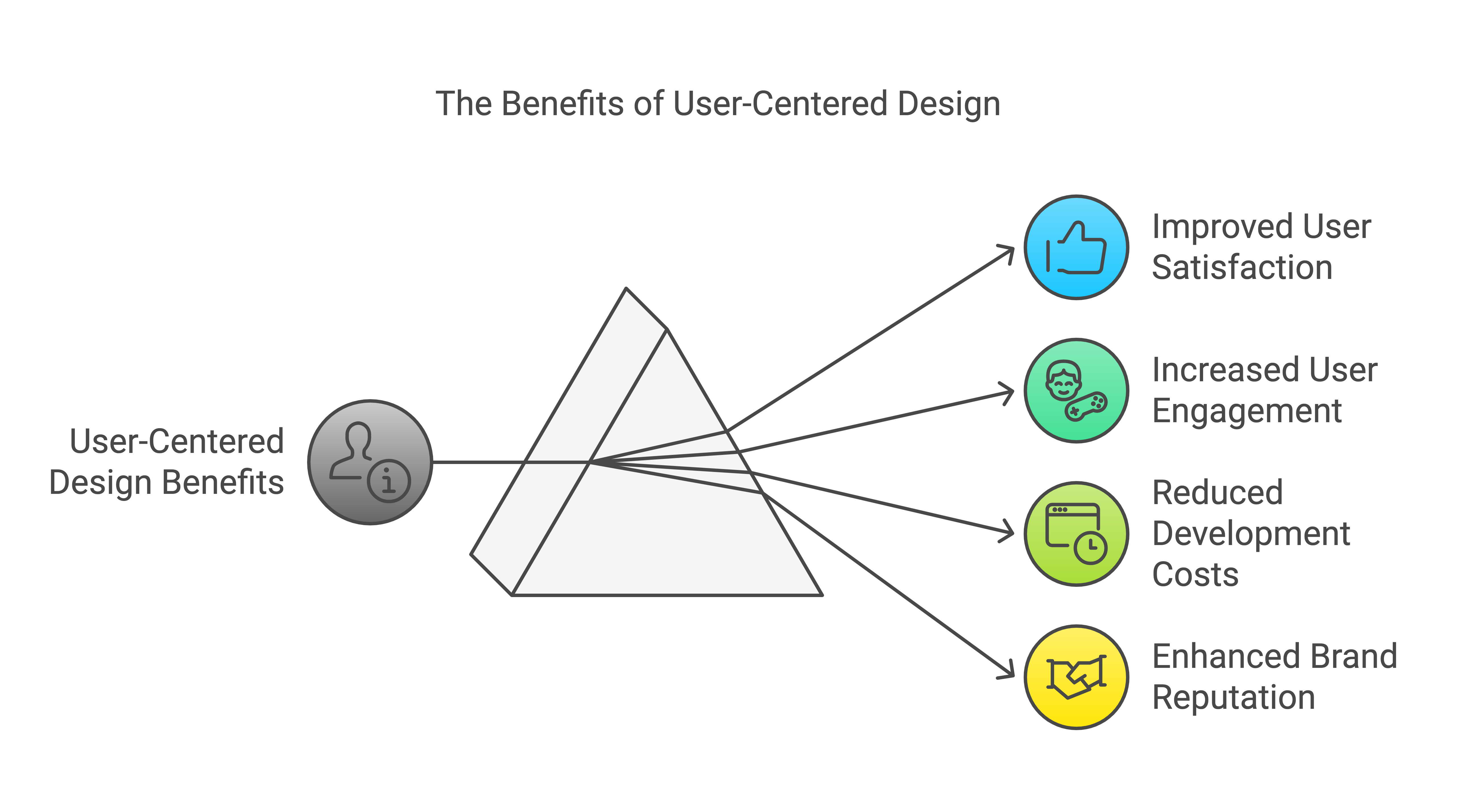
- Improved User Satisfaction
To enhance user satisfaction, products should deliver a personalized experience, utilizing user data and feedback to align with individual needs and preferences. Navigation should be intuitive and accessible, ensuring users can easily find what they need without frustration. By identifying common pain points through ongoing surveys and data analysis, teams can proactively refine products, continually improving the user experience to better meet user expectations.
- Increased User Engagement
Higher engagement is achieved by rewarding users with interactive features, like gamification or personalized content, which provide incentives for continued use. Regular updates based on user feedback also help keep the experience fresh and relevant, while carefully designed interactive elements encourage users to explore different features, fostering an engaging environment that keeps them coming back.
- Reduced Development Costs
Costs are reduced by identifying and addressing usability issues early, preventing costly rework by refining designs based on usability tests and feedback before full development. With a clear understanding of user needs guiding the process, unnecessary development cycles are minimized, creating an efficient development cycle that saves time and resources. This approach also ensures that resources are focused on high-priority features that deliver tangible user value.
- Enhanced Brand Reputation
Consistently delivering user-friendly products builds a brand’s reputation by generating positive experiences and trust, leading to positive reviews and word-of-mouth marketing. Maintaining transparency with users, such as sharing updates based on their feedback, shows a commitment to meeting their needs. Additionally, offering accessible customer support builds user confidence and strengthens brand loyalty by reinforcing reliability and attentiveness.
IntraZero’s Commitment to User-Centered Design

- User Research
At IntraZero, user research is comprehensive, involving surveys, interviews, and usability tests to understand the target user. Feedback is collected through multiple channels to form a well-rounded picture of user needs. Collaborating with local experts offers insights into cultural nuances, ensuring that product development genuinely reflects region-specific expectations and user behavior.
- Iterative Design
IntraZero conducts regular feedback sessions with users, refining products based on direct insights at each stage to enhance usability and relevance. By allowing users to influence the prioritization of features, IntraZero ensures that development is user-led, with the most desired updates implemented first, strengthening user satisfaction and engagement.
- Accessibility Testing
Following international standards like WCAG, IntraZero ensures that products meet accessibility needs, enabling usability for individuals with disabilities. This includes compatibility with assistive technologies, such as screen readers, to maintain inclusivity. The team also undergoes ongoing accessibility training to stay updated on best practices, ensuring products are usable for a wide range of audiences.
- A/B Testing
IntraZero employs A/B testing on key design elements such as layouts, calls-to-action, and color schemes to determine the most effective versions, improving user experience based on data. Tracking metrics like engagement and retention helps refine designs further, allowing for data-driven decisions that balance user preferences with business objectives. This approach ensures that design choices are grounded in actual user behavior, enhancing overall effectiveness.
IntraZero’s dedication to these UCD practices ensures that each product not only meets user needs but also builds long-term loyalty by consistently delivering valuable, user-friendly experiences.
Want to learn more about how Intrazero can help you achieve your goals?
Contact Us For More Information
Abdulrahman Sayed
EdTech & HealthTech Insights