




In today’s highly competitive educational landscape, institutions are not only striving to attract students — they’re under increasing pressure to keep them. With retention rates under the microscope and student expectations higher than ever, universities and colleges must go beyond surface-level solutions to improve engagement and ensure student success.
One often-overlooked factor in this equation? The systems students and staff interact with daily.
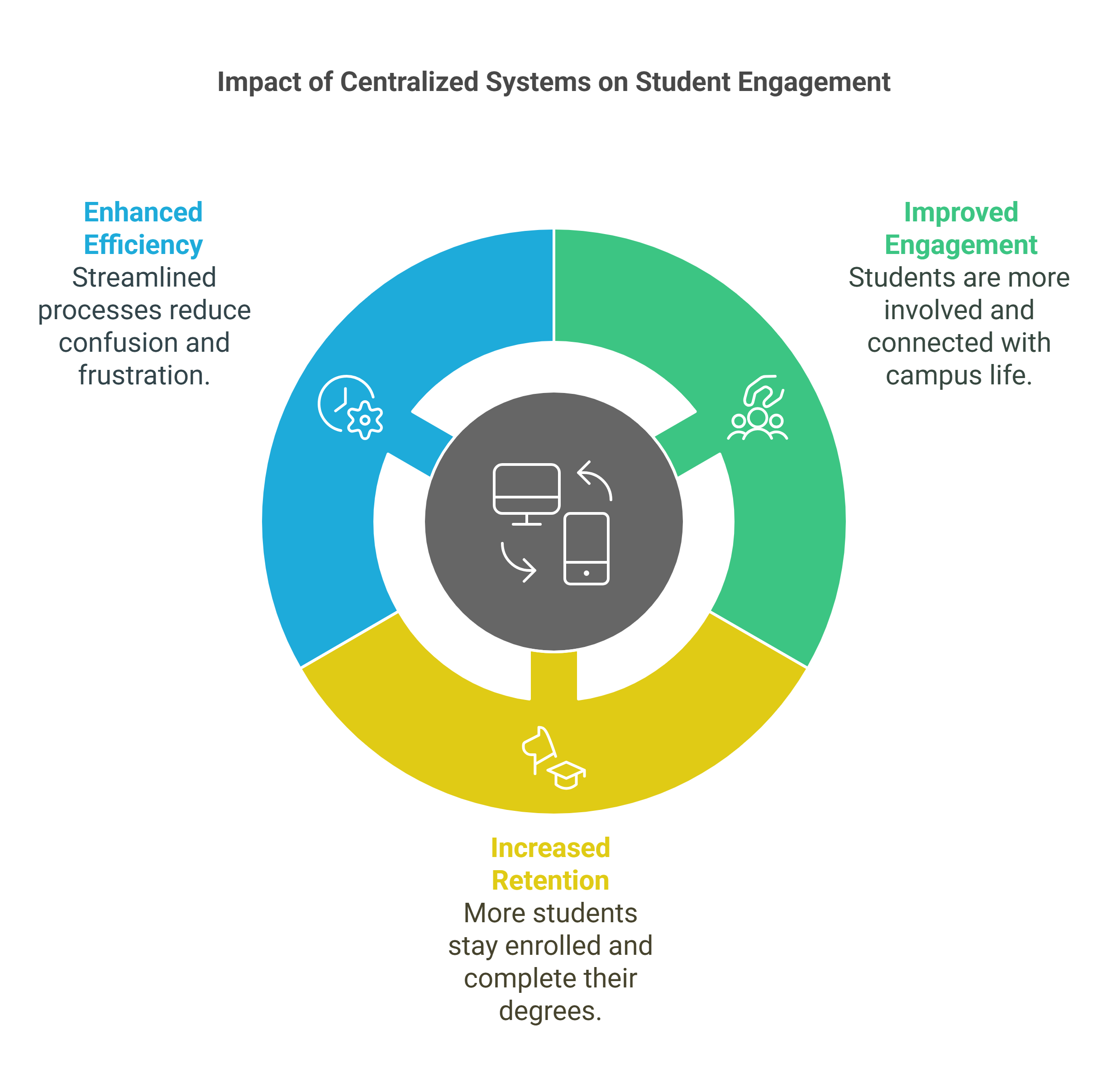
Disconnected platforms, outdated interfaces, and scattered data lead to confusion, inefficiencies, and frustration. Centralized systems, however, are proving to be a game-changer — especially when it comes to keeping students engaged and enrolled.
The Hidden Link Between Systems and Student Engagement
Every touchpoint a student has with their institution — whether it's registering for a course, checking grades, or contacting support — contributes to their perception of the university.
When these tasks are disjointed across multiple platforms, it:
- Increases cognitive load
- Delays critical actions
- Erodes student confidence
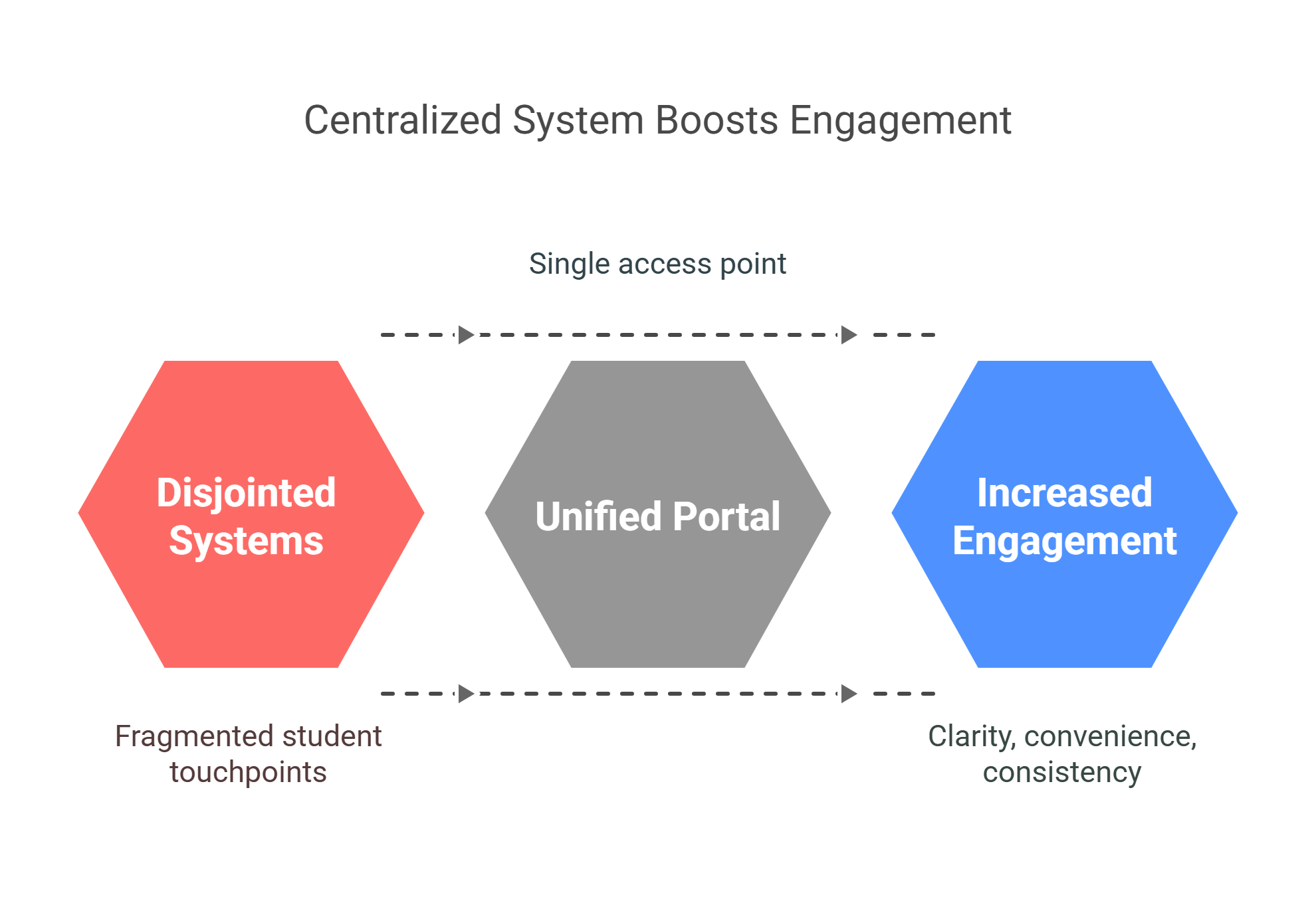
A centralized system simplifies the student journey. By providing a single portal for registration, schedules, communication, and results, students gain clarity, convenience, and consistency — all of which fuel engagement.
How Centralization Encourages Active Participation
Engagement isn’t just about enthusiasm — it’s about access, awareness, and ease.
Centralized systems offer:
- Unified Notifications: Students receive timely reminders about classes, deadlines, and announcements.
- Simplified Processes: No more searching for forms or jumping between systems — one place does it all.
- Better Communication: Built-in messaging fosters smoother communication between students and academic staff.
- On-Demand Access: Whether on mobile or desktop, students stay connected wherever they are.
This level of accessibility directly encourages students to take charge of their academic journey.
Retention Starts with Empowerment
Engaged students are more likely to persist through challenges. Centralized systems empower students by:
- Giving them greater control over their schedules and progress
- Making institutional processes more transparent and predictable
- Reducing the time and stress associated with common tasks
At-risk students can be identified earlier through centralized data and proactive interventions can be triggered. This kind of responsiveness is key to reducing dropout rates.
What to Look for in a Centralized Student Platform
Not all centralized systems are created equal. Institutions should seek solutions that:
- Are mobile-responsive and intuitive
- Support customized dashboards for different roles (students, faculty, admin)
- Include automated alerts, academic calendars, and secure messaging
- Provide real-time analytics to track usage and engagement
- Are compliant with global data privacy regulations
How iStudent Helps
iStudent was built with student success at its core. Its all-in-one platform:
- Combines all academic operations into one user-friendly interface
- Supports automated reminders and notifications
- Enables direct communication between departments and students
- Provides administrators with dashboards to monitor engagement patterns
With iStudent, institutions don’t just manage students — they empower them.
Conclusion
In the mission to improve student outcomes, technology is not just a supporting actor — it’s a driving force. A centralized student system can remove friction, build trust, and foster a stronger relationship between students and their institution.
By investing in a platform like iStudent, educational institutions can:
- Increase daily student engagement
- Detect disengagement early
- Improve long-term retention
Ready to see how centralized systems can elevate your student experience?
Request a free demo of iStudent today and take the first step toward smarter student engagement.
Mahmoud Ghonemi
Product & Engineering