




In the fast-paced healthcare industry, every second matters. Equipment malfunctions—especially with critical devices like MRI machines—can jeopardize patient safety, disrupt schedules, and incur significant costs. Effective hospital asset management is no longer a luxury but a necessity, ensuring facilities operate smoothly, equipment is reliable, and patient care is uncompromised.
The Growing Challenges in Asset Management
Modern hospitals face several challenges in managing their assets effectively:
- Frequent Downtime: Poorly maintained equipment leads to increased downtime, delaying critical medical procedures. A study by the Healthcare Financial Management Association highlights a potential 20% reduction in unplanned downtime through preventive maintenance programs.
- Rising Costs: Maintenance costs can spiral out of control without proper systems in place. Optimizing asset usage can save hospitals up to 20% annually.
- Compliance Risks: Regulatory frameworks like those set by the Joint Commission require precise documentation and regular audits. Hospitals with robust asset management programs exhibit higher compliance rates, avoiding costly penalties.
- Patient Safety Risks: Faulty or unreliable equipment can directly impact patient outcomes, with poorly managed assets contributing to 25% more medical errors, according to the Agency for Healthcare Research and Quality.
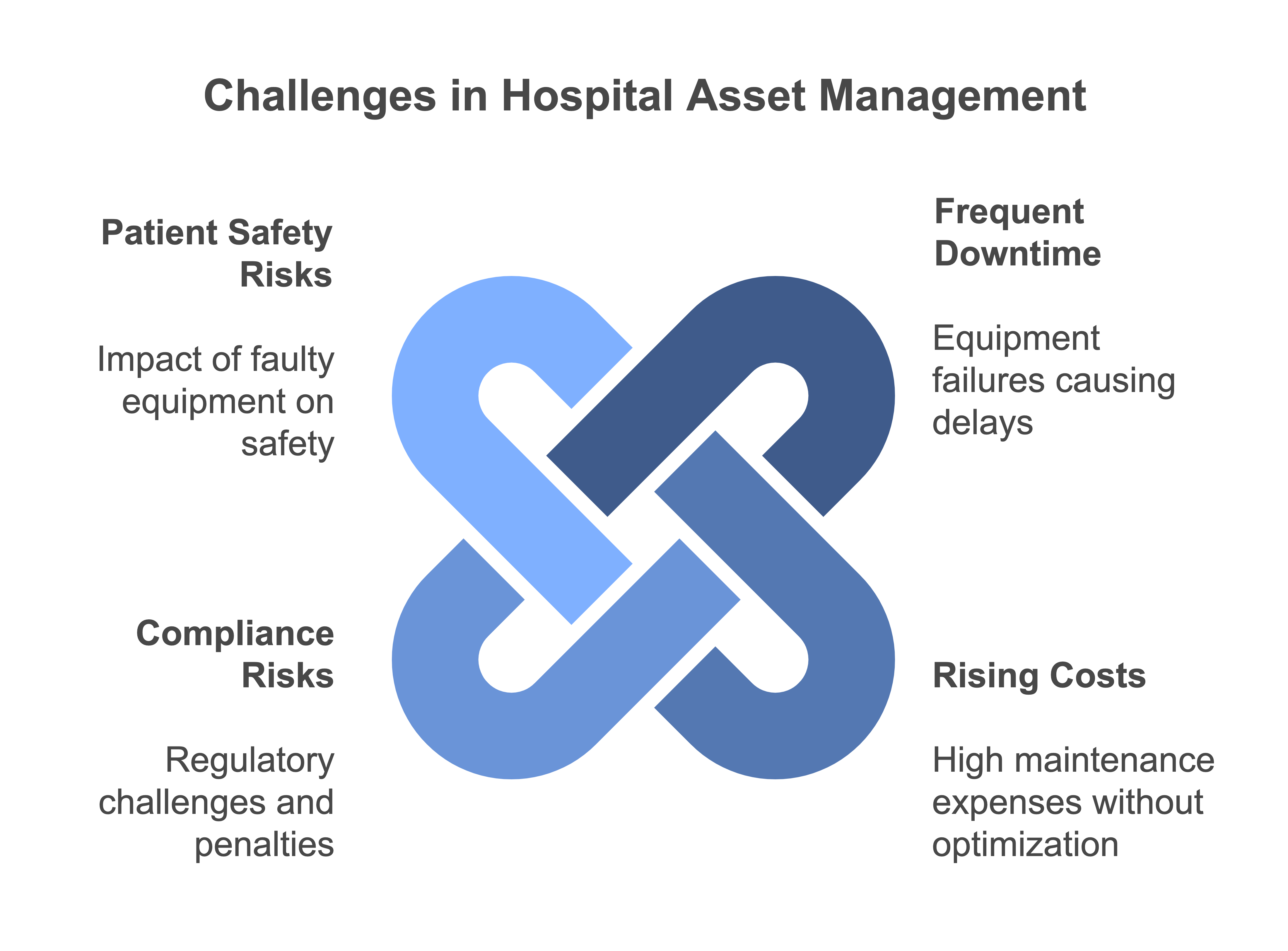
These challenges underscore the need for a structured approach to hospital asset management, supported by data-driven software solutions.
How Hospital Asset Management Transforms Healthcare
Asset management systems are the backbone of operational efficiency in hospitals. They help streamline operations and ensure that resources are used optimally. Here’s how:
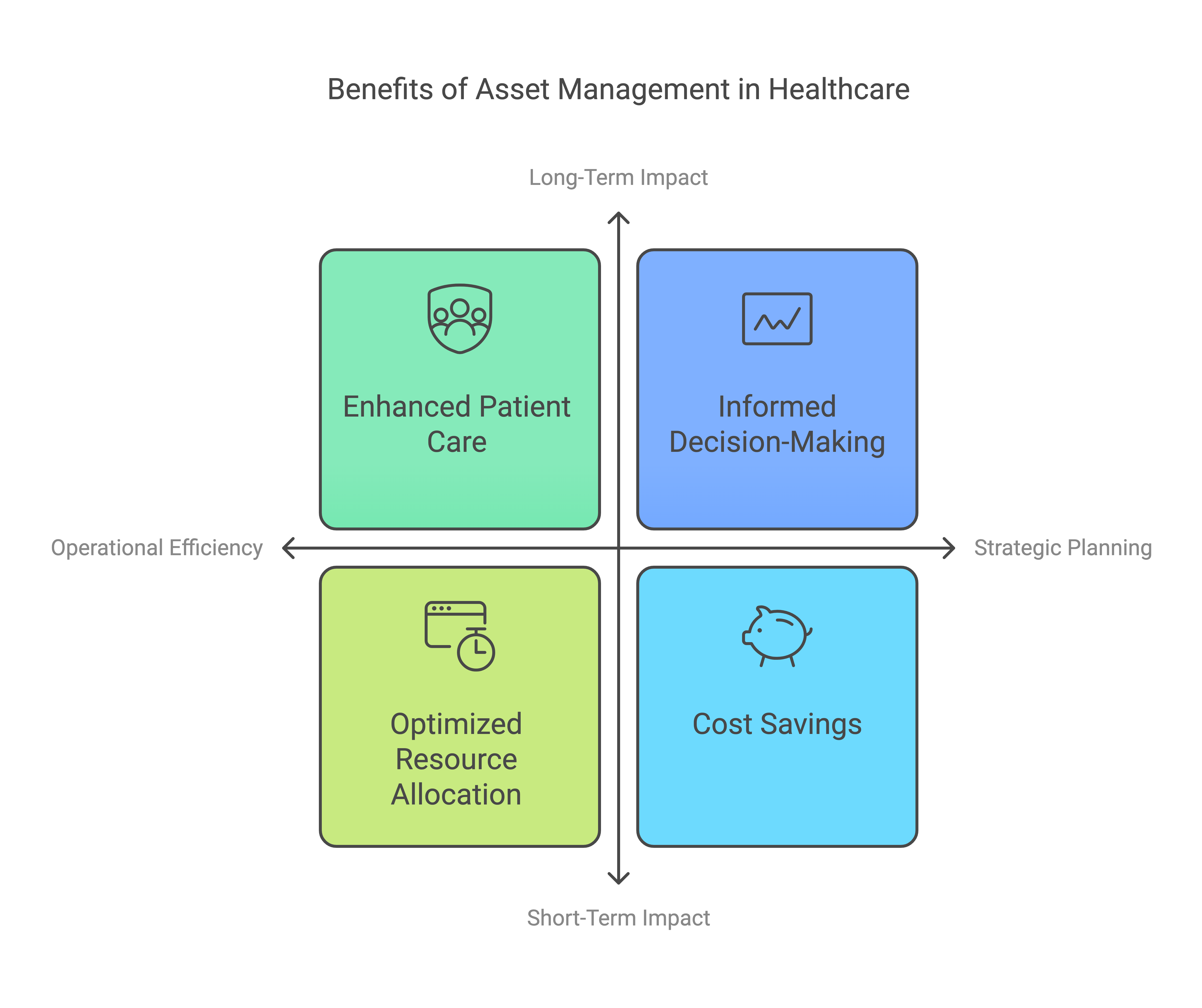
- Enhanced Patient Care: Well-maintained medical devices ensure accurate diagnoses and effective treatments. A study by AHRQ reveals that hospitals with structured asset management programs see a 25% reduction in medical errors, directly improving patient outcomes.
- Optimized Resource Allocation: By tracking utilization data, hospitals can identify underutilized equipment and redeploy it where needed. This can lead to a 15% reduction in downtime, improving overall operational efficiency.
- Cost Savings: Preventive maintenance extends asset lifespans and reduces repair costs, resulting in significant savings. Hospitals with proactive maintenance strategies experience a 10% improvement in operating margins.
- Regulatory Compliance: Accurate asset records help maintain compliance with standards like those of the Joint Commission. Asset management systems facilitate easier audits and minimize the risk of penalties.
- Informed Decision-Making: By leveraging analytics, hospitals can identify trends in equipment usage and plan future investments wisely. This ensures financial sustainability and strategic resource allocation.
Steps for Effective Hospital Asset Management
A robust hospital asset management strategy involves several critical steps:
- Asset Inventory and Tracking: Maintain a comprehensive database of all hospital assets, including their location, condition, and usage history.
- Preventive Maintenance: Establish and adhere to a regular maintenance schedule to minimize breakdowns and extend equipment lifespans.
- Corrective Maintenance: Implement systems for rapid response to malfunctions to avoid prolonged downtime.
- Performance Monitoring: Use analytics to monitor key performance indicators (KPIs) such as equipment uptime, utilization rates, and maintenance costs.
- Asset Disposal: Ensure obsolete equipment is disposed of responsibly, adhering to environmental and regulatory guidelines.
Consequences of Poor Asset Management
Ignoring proper asset management practices can have severe repercussions:
- Frequent Breakdowns: Leads to disrupted patient care and increased operational costs.
- Higher Maintenance Costs: Reactive repairs are often more expensive than preventive maintenance.
- Increased Safety Risks: Faulty equipment poses significant risks to patient safety, contributing to adverse outcomes.
- Regulatory Non-Compliance: Inadequate documentation can result in penalties and tarnished reputations.
- Inefficient Resource Utilization: Underutilized or misallocated assets waste valuable hospital resources.
Why iAssets is the Best Choice for Hospital Asset Management
Among the available asset management platforms, iAssets stands out as the ideal solution for healthcare facilities. Here’s why:
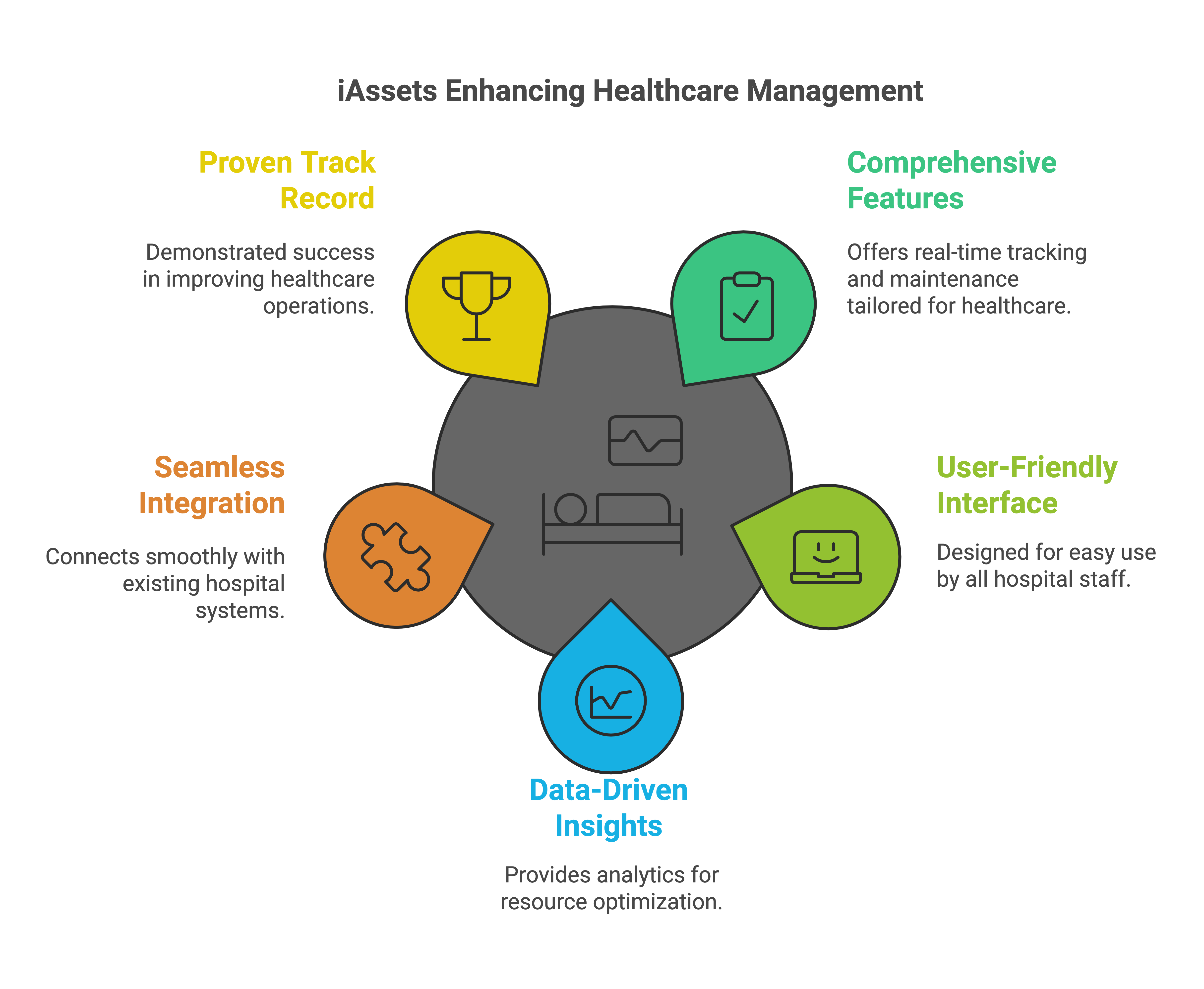
- Comprehensive Features: From real-time tracking and predictive maintenance to regulatory compliance support, iAssets is tailored for the healthcare sector’s unique demands.
- User-Friendly Interface: Designed for all users—operators, technicians, and administrators—ensuring seamless adoption and use.
- Data-Driven Insights: Advanced analytics provide actionable insights for optimizing resource allocation and planning future investments.
- Seamless Integration: iAssets integrates effortlessly with existing hospital systems, creating a unified workflow.
- Proven Track Record: Trusted by leading healthcare providers, iAssets has demonstrated significant improvements in uptime, cost efficiency, and patient care.
Transform Your Hospital with iAssets
When lives are at stake, operational inefficiency is not an option. iAssets empowers hospitals to streamline asset management, reduce downtime, and ensure regulatory compliance while keeping patient care at the forefront. Say goodbye to inefficiencies and hello to a future of reliability and excellence with iAssets—your trusted partner in hospital asset management.
Ready to revolutionize your asset management strategy? Request a Demo today!
Mohamed Adel
AI & Platform