




Cheating in higher education imposes significant financial costs on institutions. Beyond the obvious ethical concerns, academic dishonesty leads to substantial expenses related to investigating and addressing these incidents. In the US, for instance, cheating incidents cost public colleges $196 million annually in staff time alone, as reported by The Cheat Sheet. This figure highlights the substantial financial burden academic dishonesty places on universities.
The Cost of Cheating: A Closer Look
Each case of academic dishonesty requires substantial time from faculty and administrative staff. For example, in the UK, each cheating incident involves 56 minutes of academic time and 106 minutes of administrative time. For a university dealing with 1,000 cases annually, this translates to 933 hours of academic time and 1,764 hours of administrative time, costing approximately £95,181. These costs are compounded by the potential for lawsuits, loss of accreditation, and reputational damage, which can lead to declining enrollment and reduced funding.
How iTest Reduces the Costs of Cheating
iTest, with its innovative AI-powered proctoring and exam management solutions, addresses these financial challenges by reducing the time and resources spent on investigating cheating incidents.
1. AI Proctoring Saves Staff Time
- Real-time Monitoring: AI proctoring detects suspicious activity in real-time, minimizing the need for manual investigations. This approach significantly reduces the time spent reviewing exam footage and investigating potential cheating incidents.
- Cost Savings: By reducing investigation time, universities can save substantial staff hours, translating into significant cost savings. For instance, if a university reduces its cheating cases by 50% using iTest, it could save up to £47,590 annually in staff time alone.
2. Secure Exam Design Lowers Fraud Risk
- Browser Lockdown: Prevents unauthorized access to external resources during exams, reducing the risk of cheating.
- Randomized Questions: Generates unique tests for each student, making it difficult for students to share answers. This approach can lower the number of cheating incidents, reducing the financial costs associated with investigations.
- Impact: By reducing the number of cheating cases, universities can minimize the resources spent on investigations and disciplinary actions. For example, Edinburgh Napier University reduced cheating cases by 40% after implementing similar secure exam design strategies.
3. Automated Grading Cuts Administrative Costs
- Efficient Grading: AI evaluates responses accurately and quickly, freeing staff to focus on teaching and mentoring.
- Cost Reduction: Automated grading reduces administrative costs by minimizing manual grading time. This allows universities to reallocate resources to more critical tasks, such as student support and curriculum development.
4. Prevention Over Reaction: Advanced Security Measures
- ID Verification: Ensures test-taker authenticity, preventing impersonation attempts. This feature is crucial in maintaining the integrity of online exams and reducing the risk of cheating.
- 360-Degree Video Recording: Provides comprehensive monitoring, deterring cheating attempts and reducing the need for post-exam investigations. By preventing cheating rather than just reacting to it, universities can save resources and maintain academic integrity.
Conclusion
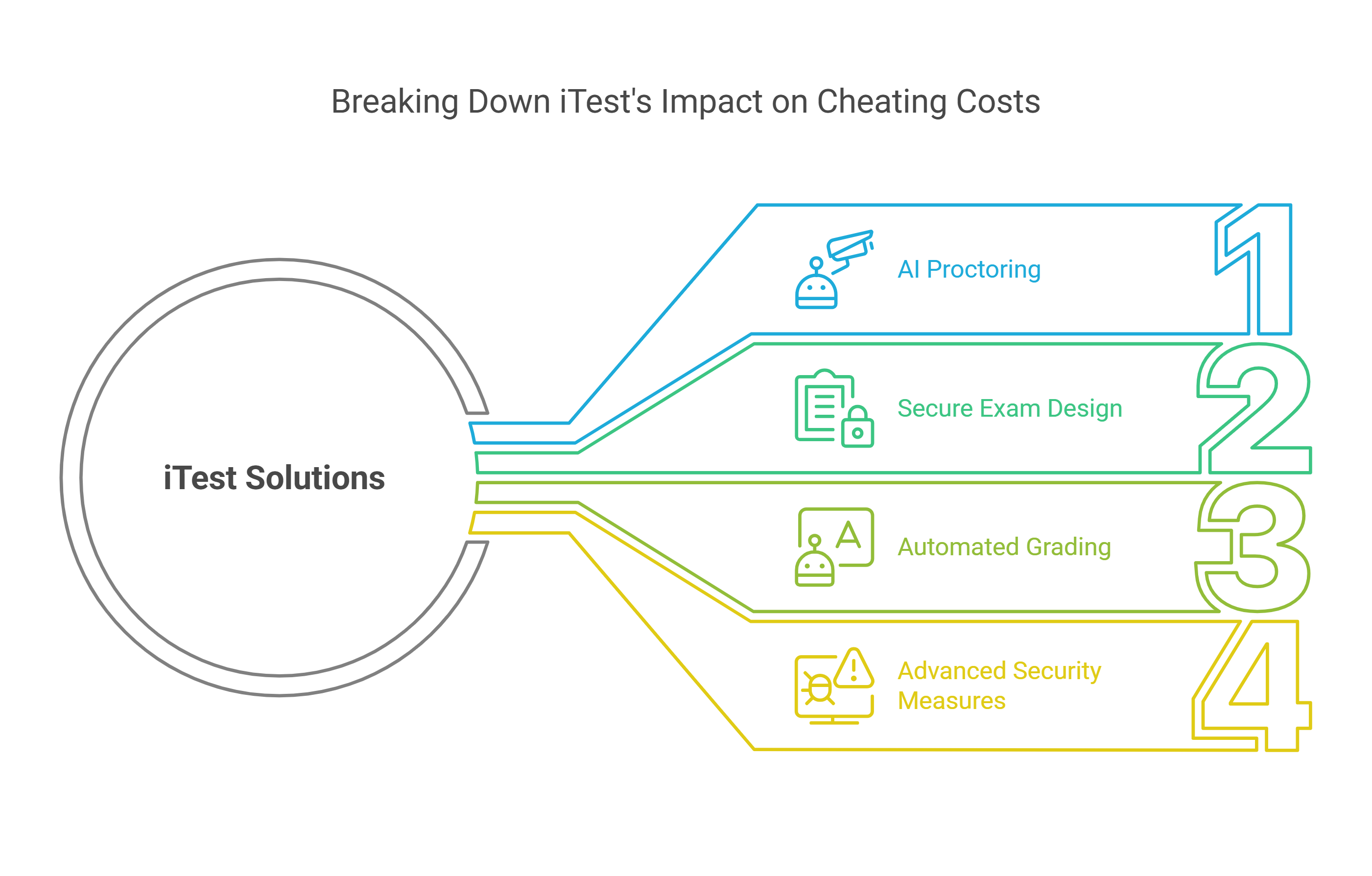
Cheating in higher education poses significant financial challenges for universities, from investigation costs to reputational damage. iTest offers a comprehensive solution to these challenges by reducing staff time spent on investigations, lowering fraud risk, cutting administrative costs, and preventing cheating through advanced security measures. By embracing innovative solutions like iTest, universities can mitigate the financial burdens of cheating while upholding academic integrity.
Mohamed Gamal
Solutions & Delivery