




Cheating in academic settings is a pervasive issue that undermines the integrity of education and the credibility of assessments. But why do students cheat? The answer lies in psychology. By understanding the motivations behind cheating, institutions can implement effective measures to deter it. Intrazero’s iTest solution not only addresses these psychological triggers but also provides cutting-edge technology to uphold academic integrity. Let’s explore.
Why Students Cheat: Psychological Triggers
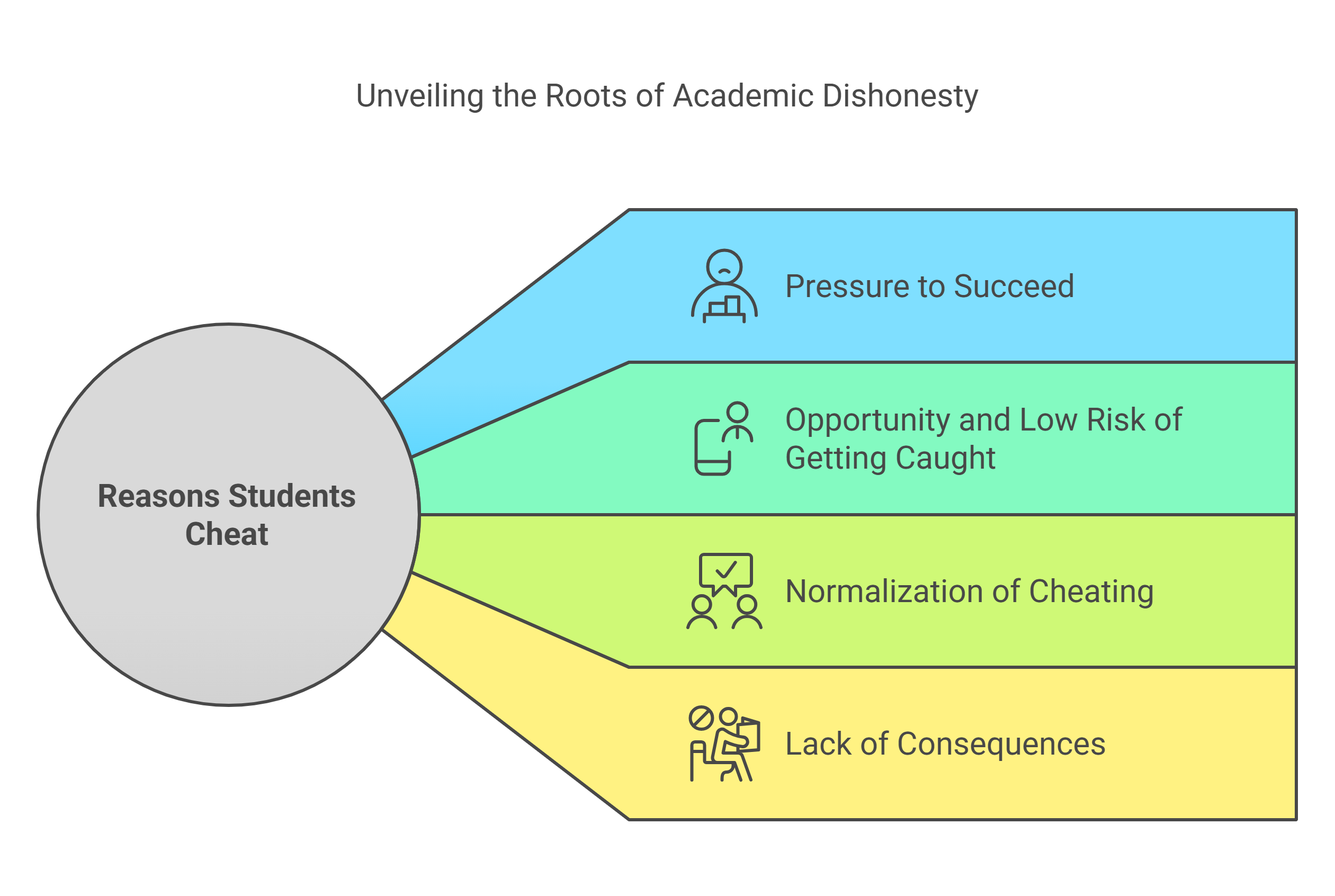
Research reveals that cheating is not simply a matter of laziness or dishonesty—it’s often rooted in psychological and environmental factors. Here are the four main reasons students cheat, backed by data:
- Pressure to Succeed
Students often feel immense pressure to achieve high grades, especially in competitive academic environments. This pressure can lead them to view cheating as a necessary means to avoid failure.- Data: "75% of college students admit to cheating due to fear of failure" (Source: International Center for Academic Integrity).
- Data: "75% of college students admit to cheating due to fear of failure" (Source: International Center for Academic Integrity).
- Opportunity and Low Risk of Getting Caught
Weak proctoring methods and online exams create opportunities for students to cheat with minimal fear of detection.- Data: "Online exams increase cheating by 40% when proctoring is weak" (Source: ProctorU study).
- Data: "Online exams increase cheating by 40% when proctoring is weak" (Source: ProctorU study).
- Normalization of Cheating
When students perceive that their peers are cheating, they may rationalize their own dishonesty as necessary to compete or fit in.- Data: "1 in 3 students believe cheating is ‘necessary’ to compete" (Source: Psychological Science Journal).
- Data: "1 in 3 students believe cheating is ‘necessary’ to compete" (Source: Psychological Science Journal).
- Lack of Consequences
Many institutions fail to enforce strict penalties for cheating, making it seem like a low-risk behavior with little accountability.- Data: "Only 2-3% of cheaters face expulsion—most receive warnings" (Source: Chronicle of Higher Education).
Breaking the Cycle of Cheating
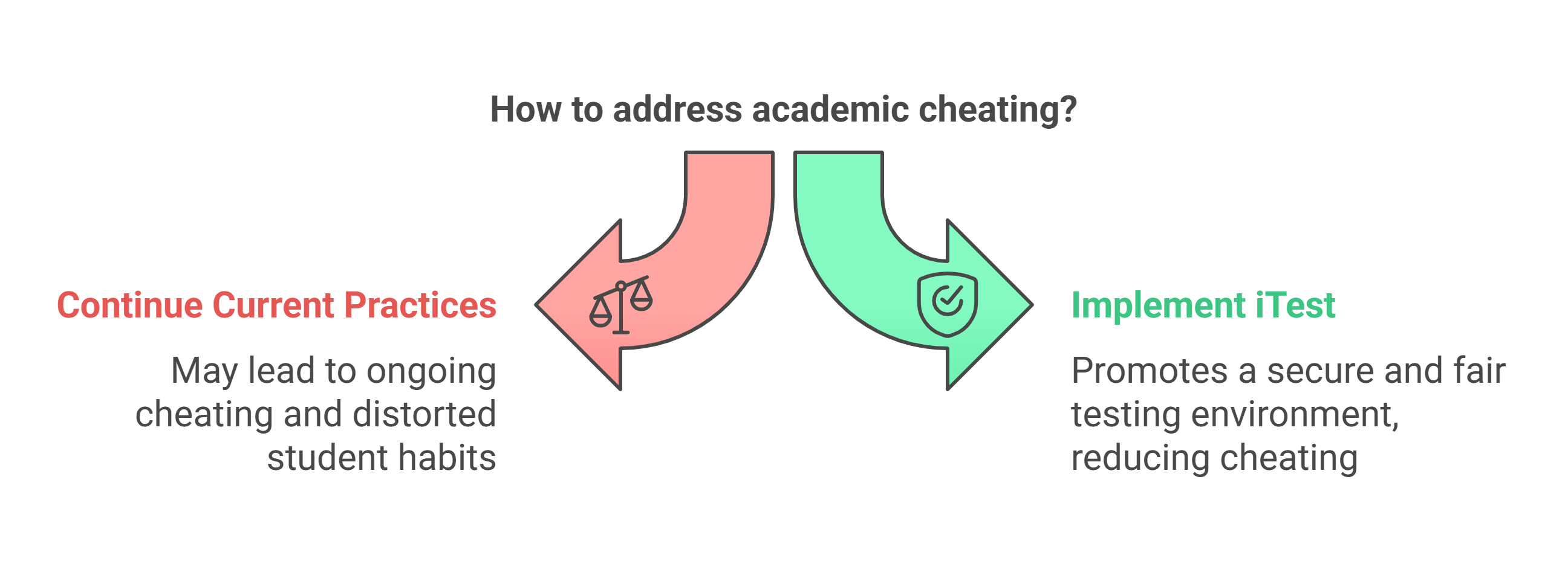
Cheating not only compromises academic integrity but also harms students’ long-term learning and professional habits. Studies show that habitual cheaters develop cognitive distortions that justify their actions, leading to inflated expectations and future failures. By implementing tools like iTest, institutions can break this cycle by creating a secure and fair testing environment.
Case Study: Egyptian Universities
Egyptian universities have faced significant challenges in combating academic dishonesty, especially during online exams. By adopting iTest, many institutions reported substantial reductions in cheating incidents:
- A remarkable 80% drop in cheating within the first semester after implementation.
- Improved academic integrity and enhanced efficiency in exam administration.
- Positive feedback from both students and educators on transparency and fairness.
Conclusion
Cheating is a complex issue rooted in psychological triggers such as pressure, opportunity, normalization, and lack of consequences. Intrazero’s iTest solution effectively addresses these triggers through advanced AI proctoring and robust exam security features. By deterring dishonest behaviors and promoting fairness, iTest empowers institutions to uphold academic integrity while fostering a culture of honest learning.
If your institution is ready to combat cheating and enhance exam efficiency, schedule a demo with iTest today!
Mohamed Adel
AI & Platform