





In the digital age, the landscape of education is evolving at an unprecedented pace. Managing student records, academic schedules, communications, and performance tracking has never been more complex. Yet, many universities and colleges continue to rely on fragmented, outdated systems, leading to operational inefficiencies, poor student experiences, and missed opportunities for growth.
Today's students are digital natives. They expect seamless, instant access to academic services, clear communication with their institutions, and intuitive platforms that mirror the simplicity of the tools they use daily. Institutions that fail to meet these expectations risk falling behind in both operational excellence and student satisfaction.
In this article, we explore why educational institutions must embrace centralized student portals today — and how doing so can revolutionize academic operations.
The Problem: Fragmented Systems
Traditionally, managing a student's academic life meant navigating a patchwork of systems: one platform for registration, another for grade reporting, manual spreadsheets for tracking attendance, and email chains for communication. While each system served its purpose at some point, collectively, they now pose several challenges:
- Data Silos: Student information is scattered across departments, leading to discrepancies, outdated records, and administrative confusion.
- Inefficiency: Staff spend countless hours reconciling data between systems, answering redundant student inquiries, and manually entering information.
- Poor Student Experience: Students juggle multiple logins, miss important deadlines, and receive inconsistent communication, adding unnecessary stress to their academic journey.
- Security Risks: Managing sensitive student data across disparate platforms increases the risk of data breaches and non-compliance with regulations like GDPR.
- Resource Drain: Maintaining multiple platforms requires more IT resources, budget allocations, and staff training.
In an era where agility and responsiveness are critical, these challenges are not just operational inconveniences; they are strategic liabilities.
Why Centralization Matters
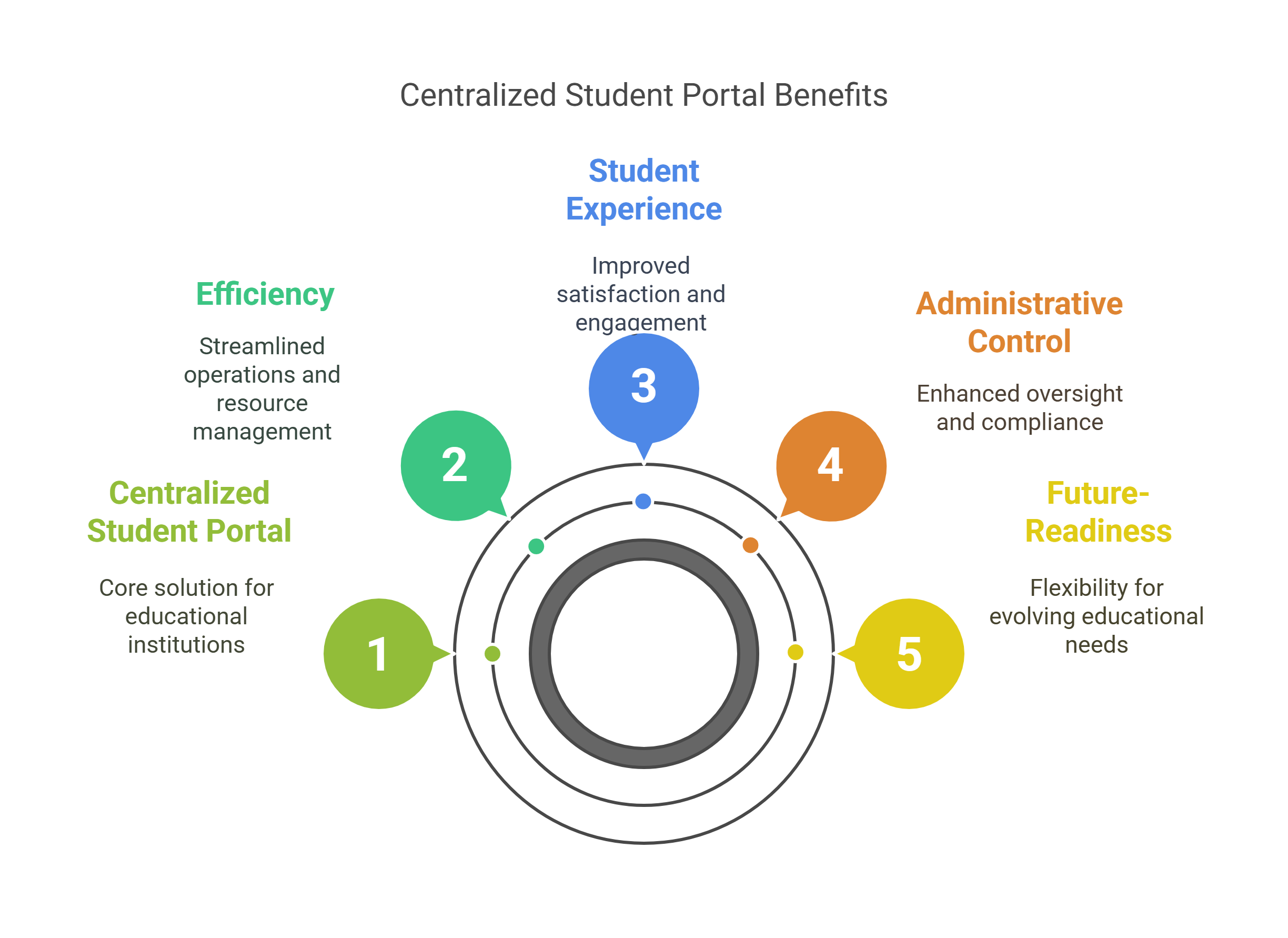
1. Efficiency at Scale
A centralized portal simplifies administrative tasks by consolidating workflows. Registration, course enrollment, grades, and academic records are all housed in one system. Staff can update, access, and verify information quickly, eliminating redundancies and reducing human error.
2. Enhanced Student Experience
Students benefit immensely from a "one-stop-shop" model. With a centralized portal, they can:
- Register for courses.
- View class schedules.
- Check exam results.
- Communicate with instructors.
- Access campus announcements.
All without toggling between multiple platforms or making frequent trips to administrative offices.
3. Stronger Administrative Control and Compliance
A unified system improves data integrity, ensuring accurate records that comply with national and international educational regulations. Real-time reporting, audit trails, and secure access control also support institutional transparency and accountability.
4. Cost Savings and Resource Optimization
Instead of licensing multiple tools and investing in custom integrations, institutions can channel resources into optimizing one centralized solution. IT teams focus on enhancing one ecosystem rather than managing a network of disconnected services.
5. Future-Ready Flexibility
Centralized systems are better positioned to integrate emerging technologies like AI-driven analytics, predictive performance insights, and hybrid learning models, ensuring institutions remain competitive in the future educational landscape.
Conclusion
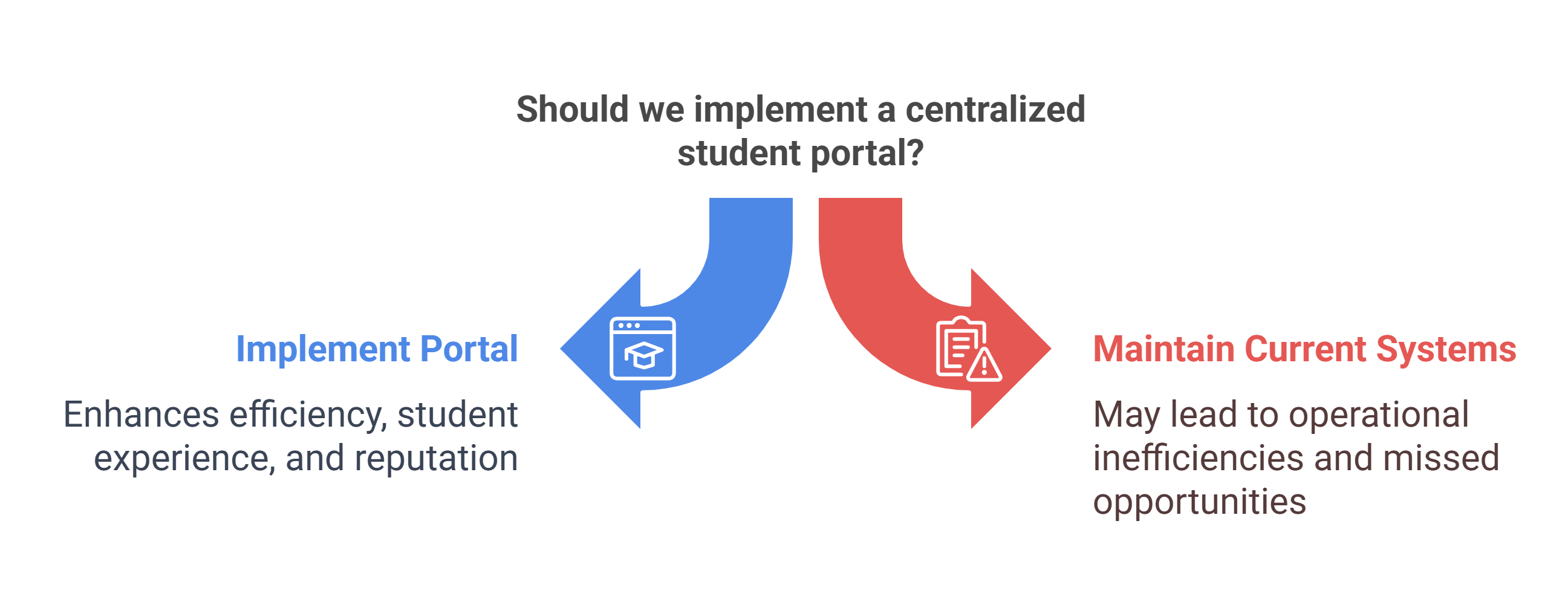
In an increasingly digital and competitive educational environment, operational efficiency and exceptional student experience are no longer optional — they are essential. A centralized student portal is no longer a luxury; it is a necessity.
Institutions that invest in streamlined, intuitive solutions like iStudent will not only improve day-to-day operations but will also enhance their reputation as forward-thinking, student-centered organizations.
By adopting centralized systems, universities and colleges can:
- Reduce administrative burdens.
- Improve compliance and data security.
- Elevate the student experience.
- Future-proof their operations.
Take the first step towards digital transformation today.
Request a free demo of iStudent and see how it can revolutionize your institution’s academic management.
Mohamed Gamal
Solutions & Delivery