




Introduction: The Broken Promise of Honor Systems
"85% of students admit they’d cheat if guaranteed no consequences." — International Journal of Educational Integrity, 2023
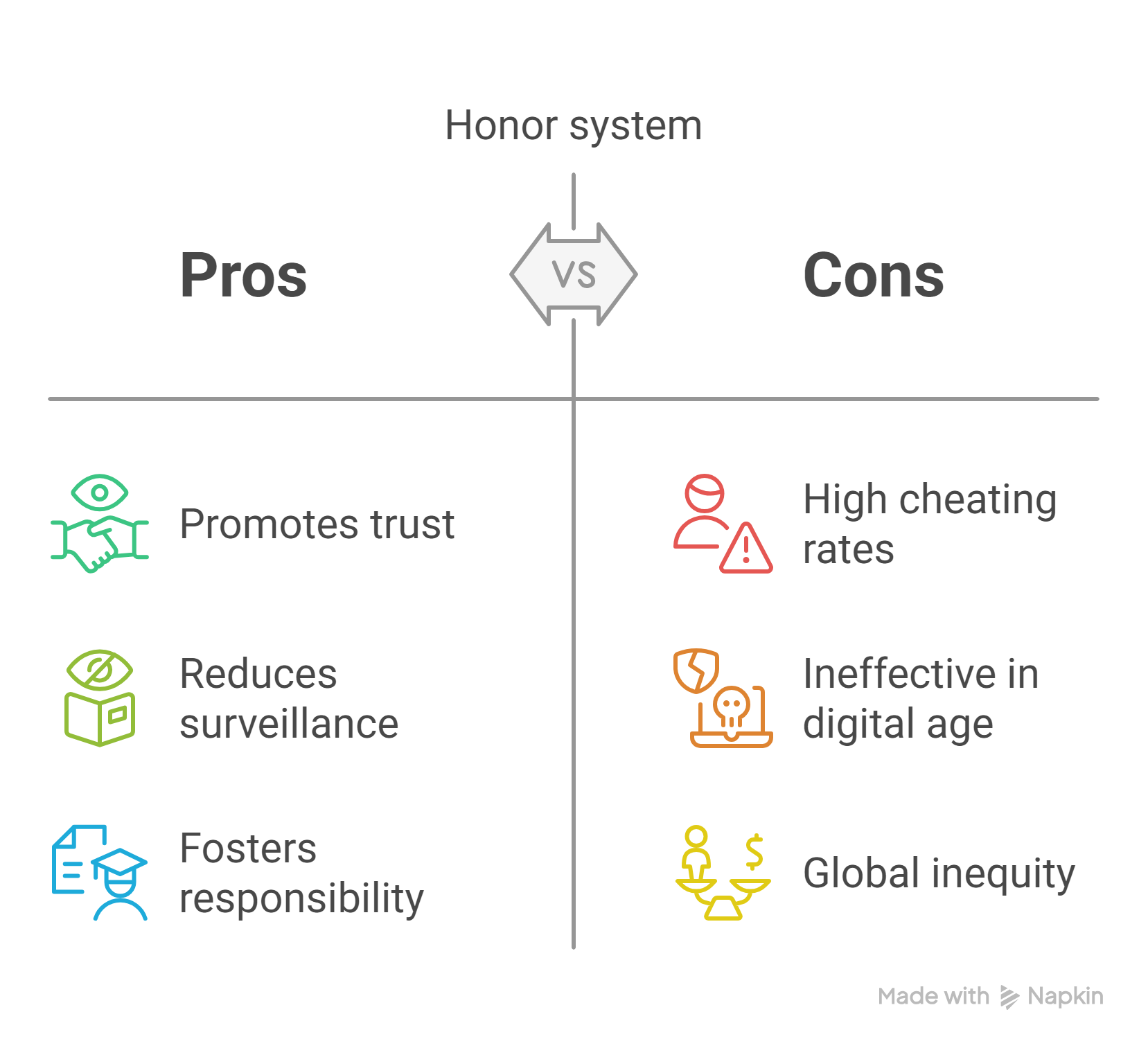
For decades, universities relied on the honor system to uphold academic integrity. However, in today’s digital landscape, this approach is no longer effective. It faces three significant challenges:
- Rising Temptation: AI tools like ChatGPT, contract cheating, and online answer banks make cheating easier than ever.
- Lack of Deterrence: Only 2-3% of cheaters face expulsion or serious consequences (Chronicle of Higher Education).
- Global Inequity: Honest students suffer when dishonest peers inflate grades, eroding trust in the system.
Part 1: Why Trust Alone No Longer Works
1. The Honor System Myth
The assumption that students will self-regulate and act honestly is no longer valid. In reality, 60% of undergraduates admit to cheating during online exams (McCabe Study, 2022). Peer pressure and the “everyone does it” mentality further undermine trust.
2. The ChatGPT Effect
AI-generated essays and answers bypass traditional plagiarism checks. For instance, a UK university found that 12% of submissions used undisclosed AI tools (Turnitin, 2024).
3. Administrative Blind Spots
Faculty lack the time and resources to thoroughly investigate every incident of cheating. Manual proctoring doesn’t scale for large courses, leaving gaps in oversight.
Part 2: AI Proctoring as the Necessary Evolution
Solution 1: Real-Time Behavioral Analytics
AI proctoring flags anomalies such as rapid answer changes or off-screen glances. The University of Toronto reduced cheating by 58% using eye-tracking AI.
Solution 2: Multi-Layered Authentication
This involves facial recognition combined with ID verification to ensure the right student is taking the exam. Additionally, keystroke dynamics help detect impersonators.
Solution 3: AI-Generated Evidence
Automated reports with timestamps and behavior logs eliminate disputes and provide concrete evidence for disciplinary action.
Part 3: Addressing Concerns Head-On
Objection 1: “AI Proctoring Invades Privacy”
iTest only records during exams, not 24/7, and data is encrypted and deleted in compliance with GDPR and FERPA.
Objection 2: “It’s Too Expensive”
The cost of cheating—accreditation risks, degree devaluation—is far greater than investing in AI proctoring. A Saudi university saved $220,000 annually by reducing re-proctoring costs.
Objection 3: “Students Will Revolt”
Transparent communication reduces resistance. When applied consistently, 76% of students support anti-cheating technology (Educause, 2023).
The Future: Hybrid Human & AI Oversight
Combining AI alerts with human review is the best practice. AI flags suspicious activity; faculty make the final decision. Arizona State’s “AI-Assisted Proctoring” reduced false positives by 90%.
Conclusion: Integrity Requires More Than Hope
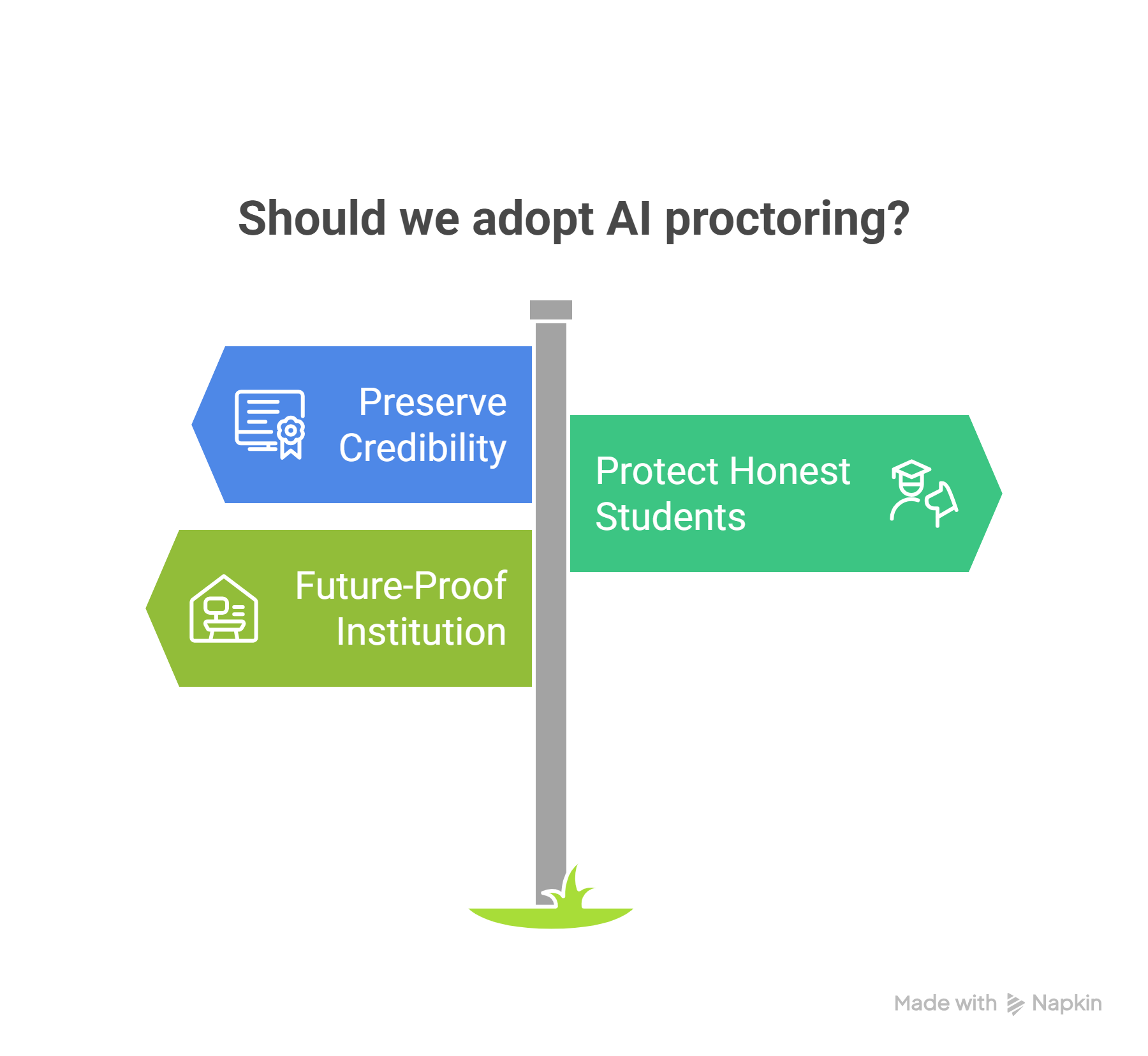
Trust-based exams are a relic of a pre-digital era. In an age of ChatGPT and contract cheating, AI proctoring isn’t just an option—it’s essential to:
✔ Preserve the credibility of your degrees
✔ Protect honest students’ efforts
✔ Future-proof your institution
Ready to move beyond the honor system?
[See How iTest Works] or [Request a demo].
Mohamed Adel
AI & Platform